More Than Just Matching Outfits: The Billion-Dollar Business of Celebrity Best Friends
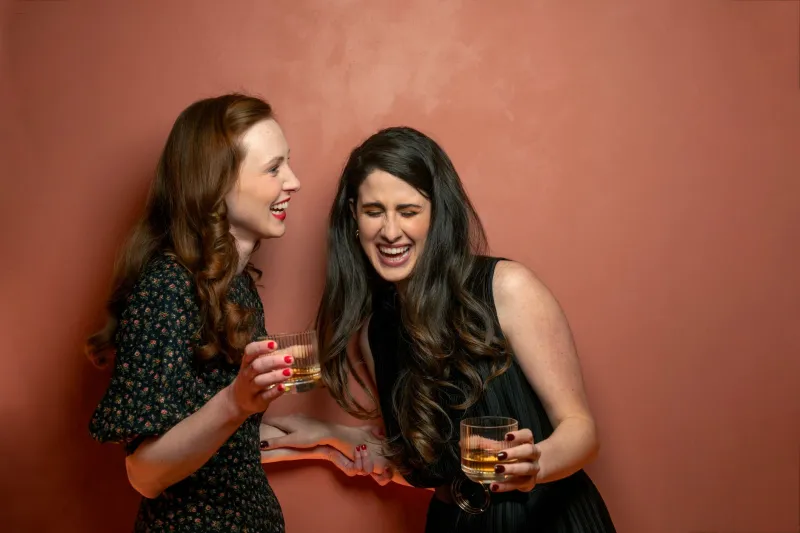
Remember when celebrity friendships were just... friendships? Two famous people spotted grabbing coffee, a candid laugh caught by a paparazzi lens, maybe a sweet shoutout at an awards show. Sweet, low-stakes, easy to root for. That version of celebrity closeness feels almost quaint now.
Because somewhere between Taylor Swift's friendship squad era and the Selena Gomez–Nicola Peltz Beckham Instagram moment cycle, something shifted. Celebrity best-friend relationships stopped being a side story and became the main event — complete with brand partnerships, synchronized content drops, and enough cross-promotional energy to make a marketing exec weep happy tears.
So what exactly are we watching? Genuine human connection playing out in public? Or a meticulously engineered content franchise wearing the costume of friendship?
Honestly? Probably both. And that tension is exactly what makes it so fascinating.
The Squad as a Strategy
Let's start with the numbers, because they don't lie. When two celebrities with massive, overlapping audiences publicly align — think Hailey Bieber and Kendall Jenner, or the ongoing Beyoncé-adjacent inner circle — the combined reach doesn't just add up, it multiplies. Brands know this. Publicists know this. And increasingly, the celebrities themselves know this with a level of precision that would impress a Wall Street analyst.
Shared social posts between high-profile friends routinely outperform solo content. Engagement spikes. New followers cross-pollinate. And if those two friends happen to be co-signed to the same management company or share a stylist — which, in Hollywood, is not exactly rare — the content pipeline practically runs itself.
The friendship bracelet economy, as some industry insiders have started calling it, is built on a simple premise: two brands are stronger than one, especially when the audience already wants to believe in the relationship. Fans don't just follow celebrities — they invest emotionally in the people those celebrities surround themselves with. A BFF endorsement carries a kind of social proof that no paid advertisement can replicate.
When the Friendship Becomes the Product
The clearest modern example of celebrity friendship as franchise is the Taylor Swift effect. During her peak squad era, Swift didn't just have famous friends — she had a rotating cast of women who became mini-celebrities by proximity, whose careers got quiet boosts from being seen in her orbit, and whose joint appearances reliably broke the internet. The squad was content. It was also, undeniably, a brand.
Fast forward to now and the mechanics have only gotten more sophisticated. Celebrities don't just hang out together — they launch together. Matching campaign appearances, joint interviews timed around project releases, coordinated outfit moments that make entertainment headlines. The line between "two people who genuinely like each other" and "two people whose teams decided a public friendship would be mutually beneficial" has never been blurrier.
And look, that doesn't have to mean the friendship is fake. Real relationships can also be strategically amplified. But it does mean that what fans are consuming is rarely the unfiltered version of anything.
What Fans Actually Get Out of It
Here's the part that doesn't get talked about enough: we're not passive observers in this economy. We're active participants, and often willing ones.
When we follow a celebrity friendship — rooting for it, creating fan content about it, defending it in comment sections — we're doing emotional labor on behalf of a relationship we have zero actual stake in. And brands count on that labor. The more invested fans are in the friendship, the more likely they are to support everything attached to it: the beauty collabs, the joint playlists, the coordinated red carpet appearances that inevitably come with a sponsored element somewhere in the chain.
There's a reason influencer marketing has pivoted so heavily toward "friend groups" content. The parasocial warmth we feel toward a celebrity duo or squad translates directly into purchase behavior. You're not just buying a lip gloss — you're buying into the vibe of a friendship you wish you were part of. The product is almost secondary.
The Authenticity Tightrope
Of course, none of this works if people stop believing in it. And audiences in 2025 are sharper than they've ever been about spotting inauthenticity. The moment a celebrity friendship starts feeling like a press tour, the magic evaporates fast — and the backlash can be brutal.
That's the tightrope every high-profile BFF duo has to walk. Too polished and it reads as a business arrangement. Too chaotic and it becomes a liability. The sweet spot is a friendship that feels real enough to generate genuine warmth but curated enough to stay on-brand for everyone involved.
Some celebrities nail it. Others — particularly those whose "organic" moments are clearly coordinated down to the caption timing — lose the audience the second the seams show.
So Is Any of It Real?
This is the question everyone eventually lands on, and the honest answer is: it's complicated, and maybe that's okay.
Celebrity friendships can be simultaneously genuine and strategic. Two people can actually enjoy each other's company and have teams that know how to monetize that chemistry. The existence of a business layer doesn't automatically hollow out the human one underneath.
What's worth thinking about, though, is how much emotional energy we're pouring into relationships that — however real they may be between the two people involved — are being packaged and sold back to us as content. When a celebrity friendship ends, fans grieve. Genuinely. And that grief is real even when the friendship was, at least in part, a product.
The friendship bracelet economy runs on our feelings. It always has. The only difference now is that everyone involved knows it — and the bracelets come with a brand deal attached.
Maybe the most honest thing we can do is enjoy the show while keeping one eye on who's selling tickets.