When AI Can Fake the Moment, What Happens to the Memory?
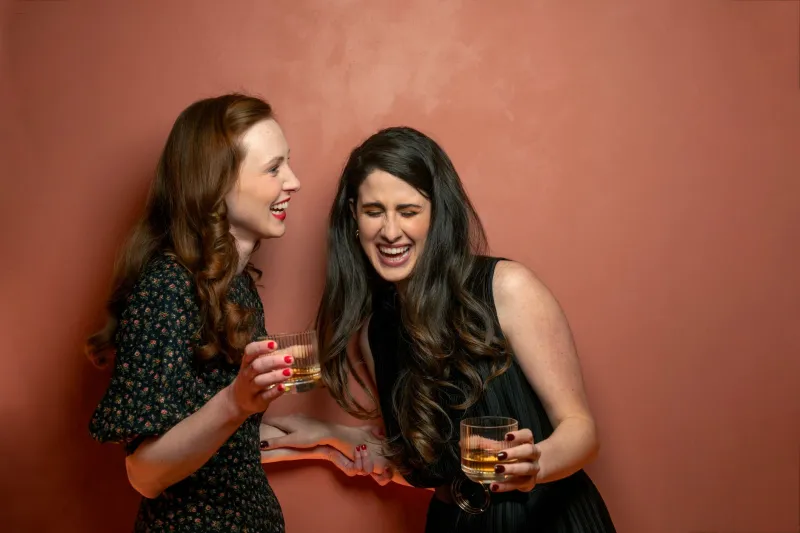
There's a specific kind of envy that lives on the internet. It's not the regular kind — not the kind you feel when a coworker gets a promotion or your neighbor pulls into the driveway with a new car. It's quieter than that. It's the feeling you get scrolling through a photo of two celebrities laughing at some rooftop dinner, looking effortlessly close, and thinking: I want that. Not the fame. Not the money. Just that. That easy, radiant, seemingly unbreakable friendship.
Except here's the thing we're all about to have to sit with: that moment might not have happened. Not in the way it looked. Maybe not at all.
The Technology Got Here Faster Than Our Feelings Did
AI-generated imagery and video — what most people loosely call deepfakes — have been around long enough that we think we know what they look like. Slightly off lighting. Weird blinking. A hand with six fingers. We told ourselves we'd be able to spot them.
We were wrong.
The gap between "obviously fake" and "indistinguishable from real" closed faster than almost anyone predicted. In 2025, we're looking at generated images of celebrities that don't just pass a quick scroll — they pass scrutiny. The metadata can be scrubbed. The context can be invented. A fabricated photo of two A-listers at a private dinner, captioned with something vague and warm, can rack up hundreds of thousands of likes before anyone thinks to question it. And even after the questions start, the damage — or the impression — is already embedded.
That's not a tech problem. That's a psychology problem.
We Were Already Halfway There
Here's what makes this moment genuinely strange: we didn't need deepfakes to already be living in a partially manufactured version of celebrity life. PR teams have been curating "candid" moments for decades. Paparazzi shots get tipped off and staged. Carefully worded Instagram captions make calculated moves look like spontaneous feelings.
We knew this, on some level. We just didn't fully apply it. There was always the reassurance that somewhere behind the polish, the real thing existed. The actual friendship. The actual vacation. The actual laugh. Even if we were only seeing a filtered version, the original was out there.
Deepfakes don't just filter the original. They replace it. And once you internalize that possibility — that any given moment might have been entirely manufactured — the whole framework shifts.
What This Does to Parasocial Relationships
Parasocial relationships, for anyone who hasn't gone down that rabbit hole yet, are the one-sided emotional bonds we form with public figures. You feel like you know them. You root for them. You feel genuinely sad when something bad happens in their life, even though they have no idea you exist.
These relationships aren't pathological or embarrassing — they're deeply human. We're wired to form connections based on repeated exposure and emotional resonance. Celebrities, by the nature of their visibility, trigger all of that.
But those bonds are built on evidence. On accumulated moments. On watching someone navigate a breakup in real time, or seeing two friends clearly love each other across years of photos and interviews. The sense of knowing someone is constructed from thousands of small data points that feel authentic.
Now imagine that data set is being quietly corrupted.
If any given moment can be fabricated — if the tearful airport reunion or the low-key birthday dinner or the friendship that made you feel less alone in your own longing for connection might simply not have happened — then what exactly are you emotionally attached to? A character someone else generated? A relationship that exists only because it was useful for someone to make you believe it did?
That's not a small thing to absorb.
The Ethics Nobody Wants to Have
There's a conversation happening in tech and media circles about the ethics of AI-generated celebrity content, and it's important — but it's also kind of missing the forest for the trees. Yes, using someone's likeness without consent is a legal and moral issue. Yes, platforms need better detection tools. Yes, there should be disclosure requirements.
All of that is true and none of it is moving fast enough.
But the deeper ethical question isn't just about the celebrities whose images are being used. It's about the audience. It's about what it means to deliberately exploit the psychological mechanisms of parasocial attachment — to manufacture the illusion of intimacy, friendship, or authenticity specifically because you know people will feel something real in response to it.
Using AI to fake a celebrity moment isn't just a copyright issue. It's an emotional manipulation issue. And right now, there's no framework for holding that accountable.
The Friendship You Wanted Was Always a Projection
This is the part that stings a little: the friendship you were jealous of — the one that looked so effortless, so warm, so real — was always partially a projection. Not because celebrities aren't capable of genuine connection, but because what you were seeing was a curated presentation of that connection, filtered through PR and platforms and the very human instinct to perform your best self publicly.
You were filling in the gaps with your own imagination. You were building a story around the fragments you were given.
AI deepfakes don't introduce that dynamic. They just make it impossible to ignore.
The question now is what we do with that. Do we disengage entirely — scroll less, invest less, care less? Some people will. But most of us won't, because the need that drives parasocial attachment doesn't disappear just because the object of it turns out to be less reliable than we thought.
Learning to Hold It Differently
Maybe the move isn't cynicism. Maybe it's a kind of recalibration.
Instead of asking "is this real?" every time we see a celebrity moment — which is exhausting and ultimately unanswerable — maybe the more useful question is: "what am I actually responding to here?" If a photo of two people laughing together makes you feel something, that feeling is real, regardless of whether the photo is. The longing it surfaces — for closeness, for ease, for the kind of friendship that looks like it costs nothing — that's worth paying attention to.
Just maybe not by investing it in a JPEG that may or may not have been generated by a server farm.
The technology is here. It's not going back. And the celebrity culture we've built — with all its carefully manufactured warmth — is going to have to reckon with the fact that it created the conditions for this. When everything is already a little bit staged, it's a very short road to everything being completely fabricated.
We're standing at the beginning of that road right now. It's worth looking up from our phones long enough to notice.