Why Your Favorite Celeb Might Actually Be Your Closest Friend Right Now
The Friendship Nobody Wants to Admit They Have
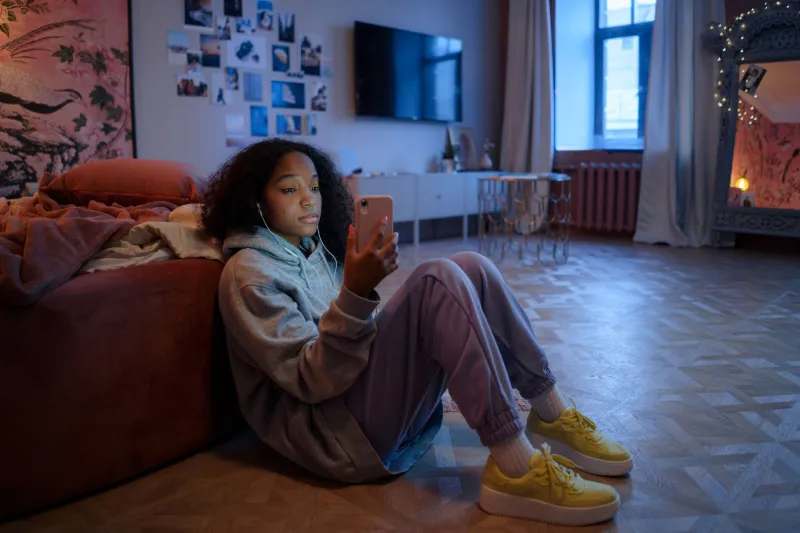
There's a specific kind of comfort that happens when you put in your earbuds and press play on your favorite celebrity's podcast. Maybe it's Dax Shepard rambling about his weekend, or Selena Gomez getting real about a hard week. You're not talking back. They don't know you exist. But somewhere in your chest, something loosens — the same way it does when you catch up with a close friend over coffee.
That feeling used to come with a side of embarrassment. We'd joke about it, call it parasocial, wave it off. But in 2025, more and more people are quietly dropping the guilt. Because honestly? When you look at the state of adult friendship in America right now, it's hard to blame anyone for finding connection wherever it actually shows up.
We're Lonelier Than We've Been in a Long Time
The surgeon general didn't issue an advisory on the loneliness epidemic for nothing. Studies keep confirming what a lot of us already feel in our bones — Americans are increasingly isolated. We have fewer close friends than we did a decade ago. We're spending less time in community spaces. We moved cities for jobs, graduated from the places that used to hold our social lives together, and somewhere in the middle of building careers and surviving adulthood, we lost the infrastructure that used to make friendship easy.
Making new friends as an adult is notoriously hard. There's no built-in system for it the way school provided. You have to work at it deliberately, and that takes time, energy, and a certain vulnerability that most people are stretched too thin to offer. So we fill the gaps. With work, with content, with the steady, low-pressure company of people we watch on a screen.
And celebrities — especially the ones who've leaned into personal content — have gotten really, really good at filling that space.
Why It Feels So Real (Even When It Isn't)
Here's the thing about parasocial relationships that makes them so psychologically sticky: your brain doesn't fully distinguish between a real friendship and a simulated one. When you watch someone consistently over time — their humor, their opinions, their bad days and their good ones — your nervous system starts to categorize them as familiar. Safe. Known.
Celebrities who do podcasts, vlogs, or long-form social content are essentially inviting you into a version of their daily life on a regular schedule. That consistency mimics the rhythm of real friendship. You check in with them the way you'd check in with a friend. You know their stories. You have opinions about their choices. You root for them.
The mechanics are the same. The reciprocity just isn't there.
But here's where it gets complicated: for a lot of people, the lack of reciprocity is actually part of the appeal. There's no pressure. No awkward silences. No worrying about whether you said the wrong thing or whether they're annoyed at you. The relationship asks nothing of you except to show up and watch.
When real friendships feel high-maintenance or emotionally risky, the low-stakes version starts to look genuinely appealing — not as a lesser substitute, but as a relief.
The Celebrities Who Understood the Assignment
Some public figures have clearly figured out that their audience isn't just looking for entertainment — they're looking for company. And they've built their entire brand around providing it.
Think about how Brené Brown turned vulnerability research into a kind of nationwide friendship. Or how Taylor Swift has spent years making her fans feel like they're in on something private. Or the way Chrissy Teigen, even through all her public ups and downs, built a following that felt less like fans and more like a group chat.
These aren't accidents. The celebrities who generate the deepest parasocial loyalty tend to be the ones who share consistently, who reference their own imperfections without making it a performance, and who speak directly to the camera like they're talking to one specific person. That direct address is powerful. It collapses the distance.
And in a country where a significant portion of adults report having no close friends at all, that collapsed distance means something.
What This Says About Modern Friendship
It would be easy to frame this as a problem — as people retreating into fake connections because they can't handle real ones. But that framing feels a little too convenient, and a little too hard on people who are genuinely doing their best in a society that hasn't exactly made community easy to maintain.
What parasocial relationships actually reveal is that the need for connection doesn't go away just because the structures that used to support it have broken down. People will find a way to meet that need. Sometimes it's a church community or a neighborhood bar. Sometimes it's a Discord server built around a shared fandom. And sometimes it's a celebrity whose voice you've heard so many times it feels like home.
The real question isn't whether these relationships are valid — they clearly serve a genuine emotional function. The question is whether we're using them as a bridge or a destination. There's a difference between finding some comfort in a parasocial connection while also investing in real-world relationships, and fully substituting the one for the other because the real thing feels too hard.
Finding Balance Without Killing the Joy
Nobody needs to feel ashamed for feeling close to someone they follow online. That feeling is human, it's normal, and given everything we know about the loneliness crisis in this country, it makes complete sense.
But it's worth occasionally asking yourself: does this connection make me feel less alone in a way that opens me up to real people too? Or has it become a reason to stay closed off?
The best version of this is when a parasocial relationship reminds you what good friendship feels like — and makes you want to go find more of it in your actual life. The trickier version is when it becomes a substitute so comfortable that real friendship, with all its messiness and effort, starts to feel unnecessary.
Celebrities aren't going to fix the loneliness epidemic. But they're holding a mirror up to it every time one of us presses play just to hear a familiar voice and feel a little less alone in the room.
And honestly? That's worth paying attention to.