One-Sided and All In: The Real Psychology Behind Why We Fall for Celebrities We'll Never Meet
Let's be honest for a second. You've probably felt a genuine sting when a celebrity couple you loved called it quits. Maybe you've defended someone famous in a comment section like they were your actual friend. Or you've felt a weird kind of grief when a public figure you admired turned out to be... not who you thought they were.
None of that makes you strange. It makes you human. But it does raise a question worth sitting with: what exactly are we getting out of these relationships that only run one way?
What Parasocial Actually Means (And Why It's Not a Dirty Word)
The term "parasocial relationship" was first coined back in the 1950s by sociologists Donald Horton and Richard Wohl, who noticed that television audiences were developing oddly personal feelings toward TV personalities. They described it as the illusion of intimacy — a sense of knowing someone who doesn't know you back.
For decades, this concept stayed pretty niche. But in 2025, it's practically a cultural cornerstone. We don't just watch celebrities anymore — we follow their morning routines, listen to their unfiltered voice memos, track their relationship timelines, and consume their "authentic" moments in real time. The parasocial pipeline has never been more efficient.
And here's the thing: psychologists aren't necessarily sounding the alarm. "Parasocial relationships serve a genuine psychological function," says Dr. Pamela Rutledge, a media psychologist who has written extensively on the subject. "They allow people to practice social skills, explore identity, and experience connection without the vulnerability or risk of real relationships."
In other words? There's a payoff. A real one.
The Brain Doesn't Really Know the Difference
Here's where it gets genuinely fascinating. When you feel like you know someone — even someone you've only experienced through a screen — your brain processes that familiarity in ways that aren't entirely different from how it processes actual relationships. The neural pathways activated when you feel social warmth toward a friend? They light up for parasocial figures too.
This isn't a glitch. It's a feature. Our brains evolved in small communities where repeated exposure to someone almost always meant they were part of your social world. The concept of a parasocial stranger didn't really exist until mass media made it possible to "see" someone hundreds of times without ever sharing physical space.
So when your favorite podcast host laughs at the same things you do, or a celebrity you follow shares a struggle that mirrors your own, your brain files them under "familiar" — and familiar, evolutionarily speaking, means safe. Means connected.
The problem isn't that the feeling isn't real. It's that the relationship isn't.
What Social Media Changed About All of This
Traditional celebrity fandom had a natural buffer. You watched someone on a screen, read about them in a magazine, maybe caught them on a late-night show. The distance was built in. You knew, on some level, that you were observing a carefully constructed public persona.
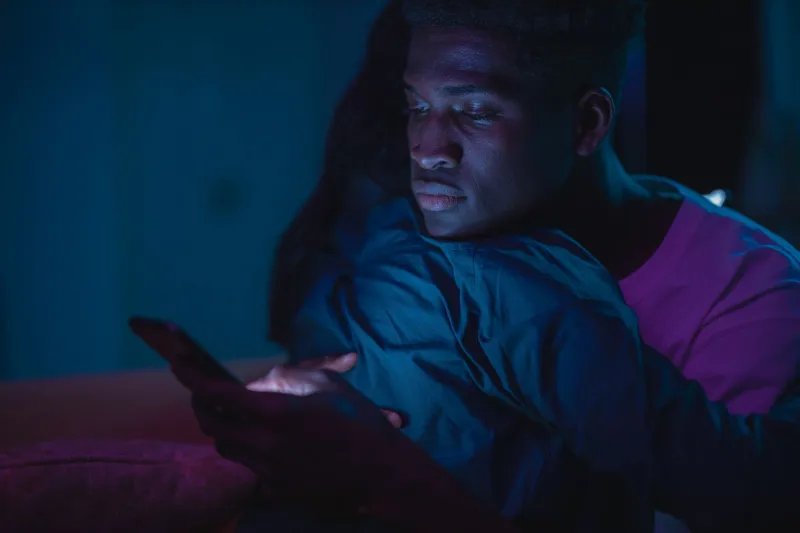
Social media — and especially the rise of direct-to-audience content like Instagram Lives, TikTok vlogs, and Substack newsletters — dismantled that buffer almost entirely. Now celebrities are talking to you. Directly. In your ear. In your bedroom at midnight. They're sharing opinions about their exes, their therapy breakthroughs, their complicated relationships with their parents.
The intimacy feels earned because it feels chosen. Like they picked you to confide in.
But as we've talked about before on this site, a lot of that "rawness" is still a performance — just a more sophisticated one. The selective vulnerability, the perfectly timed emotional reveal, the comment reply that makes ten thousand people feel like the only one in the room. It's connection as content strategy, whether the person delivering it fully realizes that or not.
That doesn't mean the feelings it generates aren't genuine. It just means the exchange isn't equal.
When Fandom Becomes Something Else
So where does healthy admiration end and something more consuming begin? Psychologists point to a few key markers.
A parasocial relationship starts to tip into unhealthy territory when it begins replacing real-world connection rather than supplementing it. When someone finds it easier to invest emotionally in a celebrity than in the actual people in their life, that's worth paying attention to. Same goes for when the relationship starts generating anxiety — obsessively checking for updates, feeling destabilized by a celebrity's choices, or experiencing genuine distress when parasocial "access" is disrupted.
There's also the identity dimension. It's one thing to admire someone's work or feel inspired by their story. It's another to build your sense of self so thoroughly around a public figure that their actions feel like personal statements about you. That's when parasocial investment stops being a supplement to identity and starts functioning as a substitute for one.
For most people, though, it doesn't go that far. Most of us exist in a kind of comfortable middle ground — genuinely fond of certain public figures, emotionally engaged with their stories, but still fundamentally grounded in our own lives and relationships.
The Part Nobody Talks About: What We're Actually Looking For
Here's an honest take: parasocial relationships are often filling real gaps. Loneliness is at epidemic levels in the US — the Surgeon General literally issued an advisory on it in 2023. People are working more, connecting less, and navigating a social landscape that feels increasingly fragmented and exhausting.
In that context, the parasocial bond makes a lot of sense. It's connection without conflict. Intimacy without obligation. You can feel genuinely warm toward someone, follow their journey, root for them — and never have to show up for them on a bad day.
That's not cynical. It's just honest about what these relationships offer and what they can't. They can make us feel less alone. They can introduce us to perspectives we wouldn't otherwise encounter. They can even, occasionally, inspire real change in how we see ourselves or the world.
What they can't do is hold you accountable, grow alongside you, or truly know you back.
So Is It Healthy? (The Actual Answer)
It depends — and that's not a cop-out. Parasocial investment, like most things, exists on a spectrum. At its best, it's a low-stakes way to experience community, explore values, and feel a little less alone in a noisy world. At its worst, it's a substitute for the messier, more vulnerable work of building real human connection.
The question isn't really whether you should have parasocial feelings about the people you follow — you probably will regardless, because that's just how human brains work. The more useful question is whether you're aware of what those feelings are and what they're doing for you.
Because there's something genuinely worth examining in the fact that we'll invest enormous emotional energy in someone who will never know our name. Not as a judgment — but as an invitation to ask what that energy might look like if it also had somewhere real to go.